
Navigating Pancreatic Biliary Disorders: The Role of an Advanced Gastroenterologist in Mumbai Mira Road

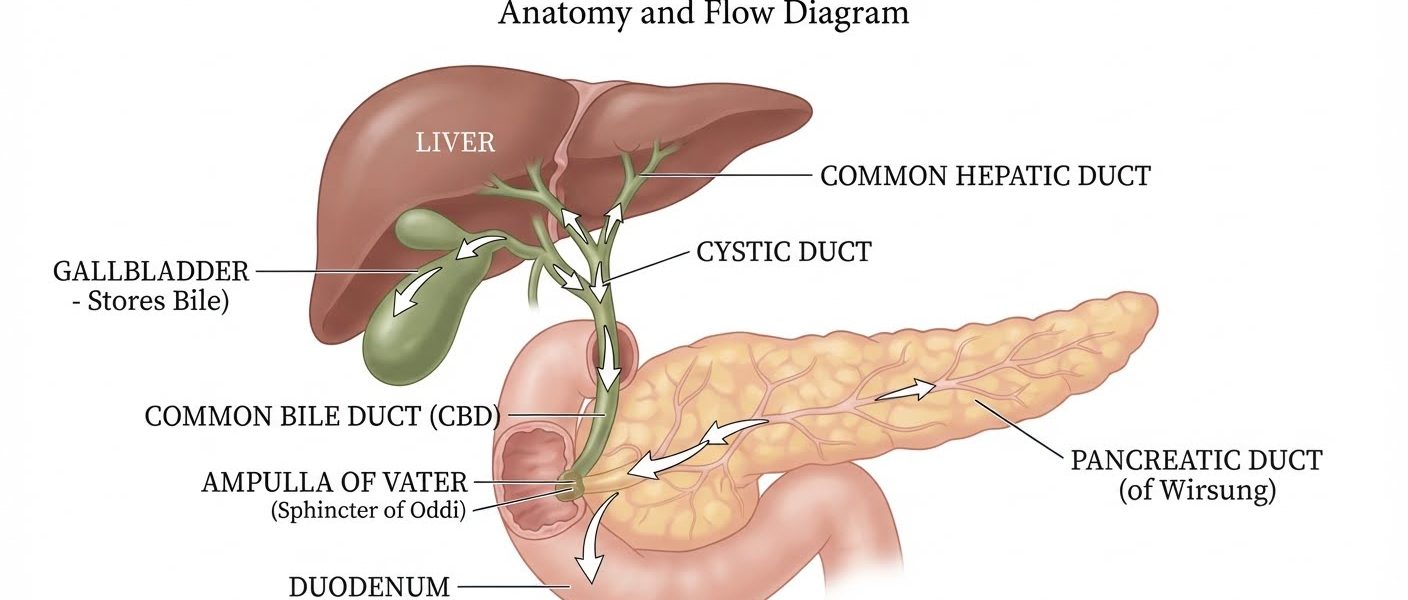
The biliary tract and pancreas form the core metabolic and enzymatic engine of human digestion:
What’s Covered
- Common Biliary and Pancreatic Conditions
- ENDOSCOPIC BASKET RETRIEVAL OF CBD STONE VIA ERCP
- Description from Endoscopic View
- Long-Term Management of Pancreatic Insufficiency
- World-Class Digestive & Biliary Care at Gastronaut Clinic
- GASTRONAUT CLINIC LOCATIONS
- KANDIVALI WEST CLINIC
- MIRA ROAD EAST CLINIC
- The liver and gallbladder produce and store bile, which is released into the small intestine to break down and absorb dietary fats.
- The pancreas produces vital digestive enzymes (lipase, amylase, proteases) and hormones (insulin and glucagon) that regulate systemic blood sugar.
Because these organs share connected ducts—meeting at the Ampulla of Vater in the duodenum—a problem in one organ often impacts the other. Conditions affecting this system require the expertise of an experienced gastroenterologist in Mumbai and gastroenterologist in Mira Road.
Common Biliary and Pancreatic Conditions
1. Gallstones and Choledocholithiasis (CBD Stones)
Gallstones form when bile becomes supersaturated with cholesterol or bilirubin pigments. While stones residing quietly in the gallbladder are common, complications arise when a stone slips into the Common Bile Duct (CBD):
- Obstructive Jaundice: The bile duct becomes blocked, causing bilirubin to back up into the bloodstream (leading to yellowing eyes, dark urine, and pale stools).
- Acute Cholangitis: Stagnant bile behind the stone becomes infected, triggering high fever with chills and severe abdominal pain.
- Gallstone Pancreatitis: A stone lodged near the ampulla obstructs the pancreatic duct, causing digestive enzymes to activate inside the pancreas itself.
2. Acute & Chronic Pancreatitis
Pancreatitis is an inflammation of the pancreatic gland:
- Acute Pancreatitis: Sudden, severe upper abdominal pain that radiates straight through to the back, accompanied by nausea, vomiting, and elevated serum lipase/amylase levels.
- Chronic Pancreatitis: Long-term, progressive inflammation leading to permanent structural damage, ductal stones, chronic pain, poor nutrient absorption (steatorrhea or oily stools), and diabetes.
Advanced Interventional Endoscopy: What Is ERCP?
When stones or strictures obstruct the bile or pancreatic ducts, major open surgery is not always required. Gastroenterologists utilize ERCP (Endoscopic Retrograde Cholangiopancreatography):
HOW ERCP CLEARS BILE DUCT BLOCKAGES
1. Side-Viewing Endoscopy: A specialized scope is guided to the duodenum
2. Cannulation: A tiny catheter enters the opening of the bile duct.
3. Fluoroscopy (X-ray): Contrast dye maps the exact location of stones.
4. Sphincterotomy: A small, precise incision widens the duct opening.
5. Stone Extraction & Stenting: Baskets remove stones, and temporary stents are placed to restore immediate bile flow
ENDOSCOPIC BASKET RETRIEVAL OF CBD STONE VIA ERCP
|
Component / Step |
Description from Endoscopic View |
|
Anatomical Location |
Inside the Duodenum (the first part of the small intestine) along the Duodenal Wall. |
|
The Pathway |
The Common Bile Duct, which is being accessed through the endoscope’s working channel. |
|
The Obstruction |
A [STONE] is lodged inside the common bile duct, blocking fluid flow. |
|
The Intervention |
A medical specialist deploys a wire basket through the endoscope to capture and remove the stone. |
This diagram illustrates an ERCP (Endoscopic Retrograde Cholangiopancreatography) procedure used to clear bile duct stones.
ERCP provides a minimally invasive way to clear blockages, resolve jaundice, and relieve pain without incisions.
Long-Term Management of Pancreatic Insufficiency
For patients living with chronic pancreatitis or recovering from acute episodes, managing digestive enzyme levels is vital:
- Pancreatic Enzyme Replacement Therapy (PERT): Tailored doses of enteric-coated digestive enzymes taken with every meal to ensure proper fat and protein absorption.
- Nutritional Optimization: Supplementing fat-soluble vitamins (A, D, E, K) and adopting small, frequent meals to minimize stress on the pancreas.
- Strict Avoidance of Triggers: Complete avoidance of alcohol and smoking, which are primary contributors to pancreatic inflammation and calcification.
World-Class Digestive & Biliary Care at Gastronaut Clinic
Managing complex pancreatic, biliary, and liver conditions requires clinical expertise and access to modern diagnostic tools.
At Gastronaut Clinic, Dr. Raajeev Hingorani provides tertiary-level medical gastroenterology and hepatology care across both Kandivali West and Mira Road East. Backed by over 15 years of clinical practice, thousands of successful therapeutic procedures, and a patient-centered approach, Gastronaut Clinic is a trusted destination for digestive wellness across Mumbai.
GASTRONAUT CLINIC LOCATIONS
KANDIVALI WEST CLINIC
Nursing Home 101, 103, 1st Floor, Bhoomi Shivam Society, Plot No. 168,
RDP 7, Opposite Domino’s Pizza, Charkop Sector 3, Kandivali West,
Mumbai, Maharashtra 400067
Contact: +91 83694 14120 / +91 86559 10650
MIRA ROAD EAST CLINIC
301, 3rd Floor, Raj Oaks Building, MTNL Road, Near Don Bosco School,
Shanti Park, Mira Road East, Mira Bhayandar, Maharashtra 401107
Contact: +91 80970 21849 / +91 83694 14120
Email: wecare@gastronautclinic.com
Key Takeaways
- The liver and gallbladder produce bile, which aids in breaking down and absorbing dietary fats in the small intestine.
- Gallstones form due to supersaturation of bile with cholesterol or bilirubin pigments, leading to potential complications like obstructive jaundice and acute cholangitis.
- Acute pancreatitis presents as severe abdominal pain and elevated serum lipase/amylase levels, while chronic pancreatitis leads to long-term inflammation and structural damage.
- Endoscopic Retrograde Cholangiopancreatography (ERCP) is a minimally invasive procedure used to clear blockages in the bile or pancreatic ducts without major surgery.
- Pancreatic Enzyme Replacement Therapy (PERT) is essential for managing digestive enzyme levels in patients with chronic pancreatitis.
- Gastronaut Clinic in Mumbai, led by Dr. Raajeev Hingorani, provides specialized care for complex pancreatic and biliary conditions.